Kitchen Design Trends That Feel Fresh, Elevated, and Enduring
Kitchen design is having a moment—and not the fleeting, trend-chasing kind. Today’s most compelling kitchens balance warmth, texture, and timeless materials with thoughtful contrast and layered detail. At Brite Lite, we’re seeing a shift away from stark minimalism toward spaces that feel curated, lived-in, and timeless.
If you’re planning a renovation or simply refreshing your space, these are the kitchen design trends worth investing in now.
The Return of Warm Woods (With a Modern Edge)
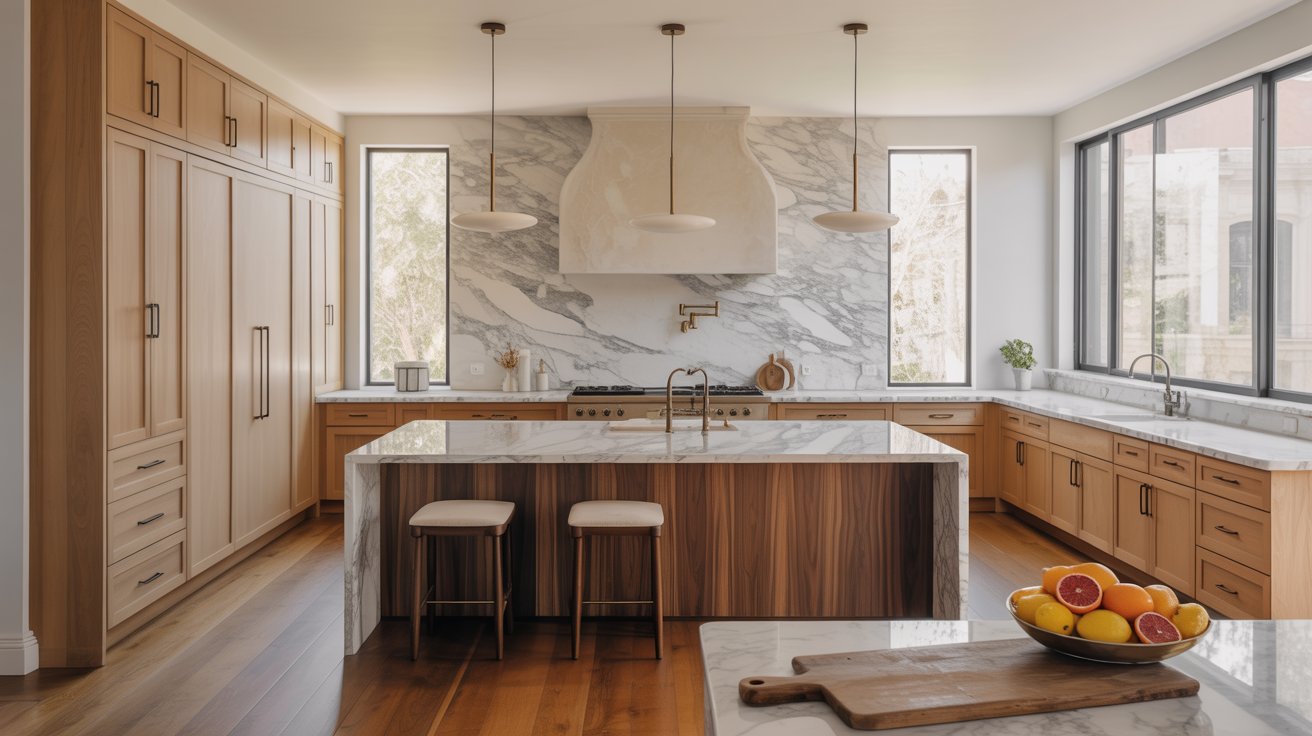
Light wood cabinetry is leading the charge, bringing an organic softness back into the kitchen. Think white oak, rift-sawn finishes, and matte textures that highlight natural grain without feeling rustic.
What makes this trend feel current is contrast—pairing light wood cabinetry with darker elements like hardware, lighting, or stone.
How to style it:
- Flat-panel or slim shaker cabinet profiles
- Dark hardware in matte black or oil-rubbed bronze
- Subtle veining in countertops to keep the palette cohesive
Why it works: It warms up the space without overwhelming it, creating a clean yet inviting foundation.
Creamy Painted Cabinetry + Aged Brass Details
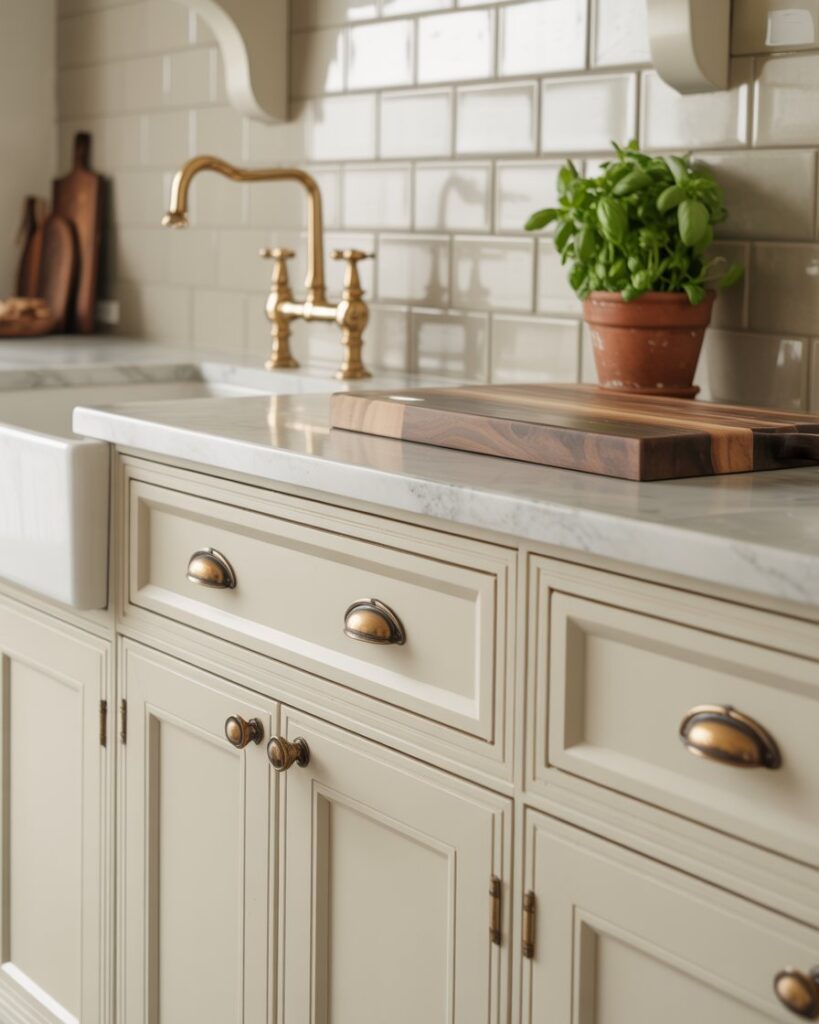
Bright white kitchens are softening into warmer, creamier tones—ivory, antique white, and barely-there beige. These hues feel more forgiving, more layered, and more aligned with natural materials.
Paired with aged brass or unlacquered brass hardware, the effect is understated elegance.
How to style it:
- Cream cabinetry with inset or classic shaker doors
- Aged brass knobs, pulls, and bridge faucets
- Soft marble or quartz countertops with warm undertones
Why it works: The combination feels timeless, but not predictable. It’s classic with depth.
Statement Stone Backsplashes
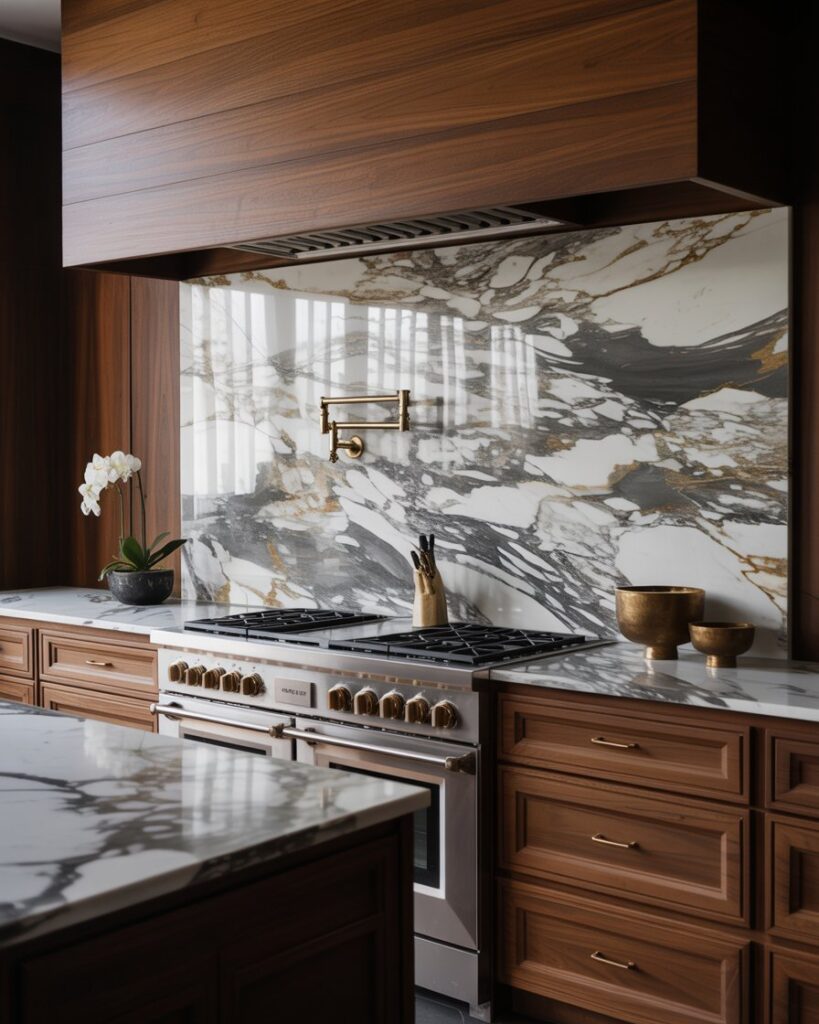
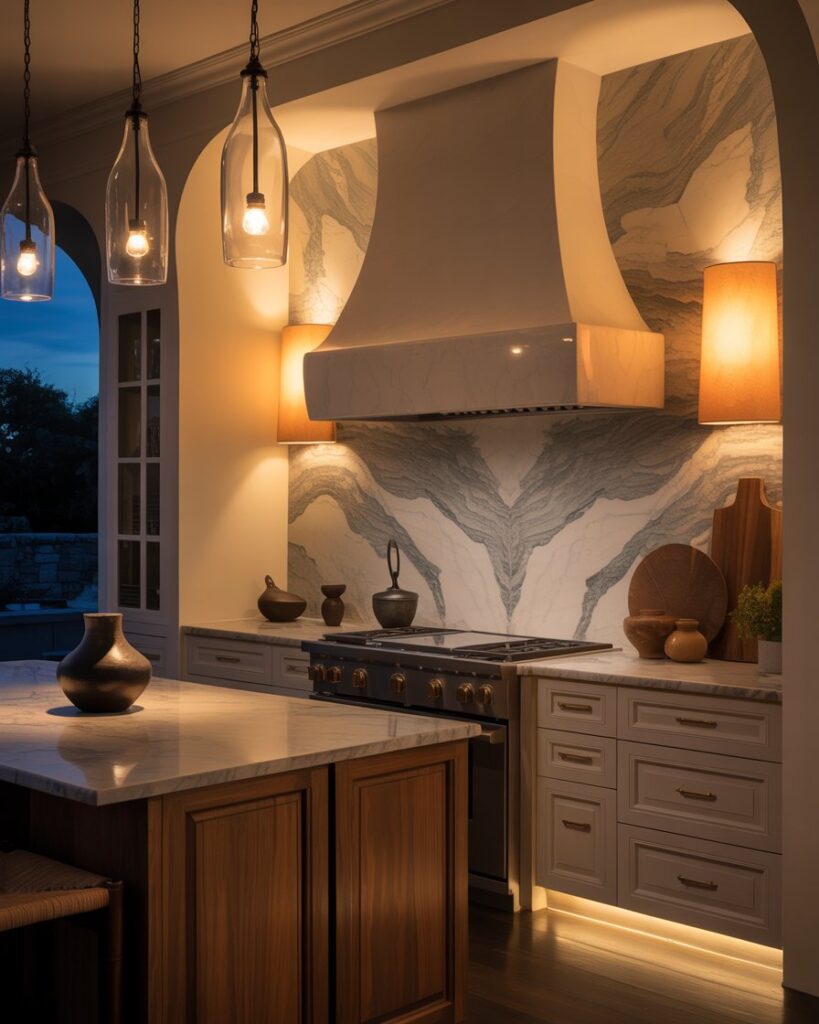
The backsplash is no longer just a backdrop—it’s a focal point. Designers are extending countertop stone up the wall for a seamless, sculptural look.
From dramatic veining to subtle limestone textures, stone backsplashes add visual interest without relying on pattern-heavy tile.
How to style it:
- Full-height slab backsplash behind range or sink
- Bookmatched marble for a high-impact focal wall
- Waterfall edges that continue into the backsplash
Why it works: It simplifies the palette while elevating the entire kitchen.
Mixed Materials & Layered Finishes
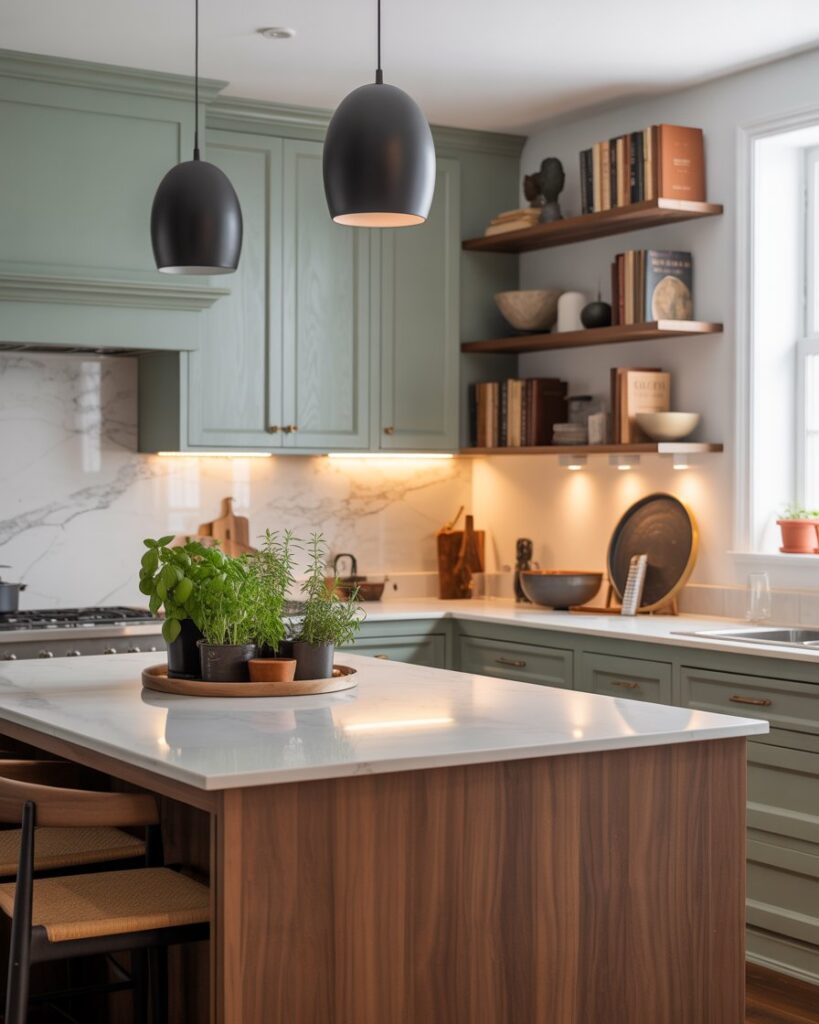
Today’s kitchens feel collected, not matched. Mixing materials—wood, painted cabinetry, metal finishes, and stone—creates a richer, more dimensional space.
How to style it:
- Wood island paired with painted perimeter cabinets
- Mixed metals (aged brass + matte black or polished nickel)
- Open shelving in wood or metal to break up cabinetry
Why it works: It avoids the “all one finish” look and adds depth without clutter.
Subtle Contrast Over High Contrast
While black-and-white kitchens will always have a place, the new approach to contrast is softer and more tonal.
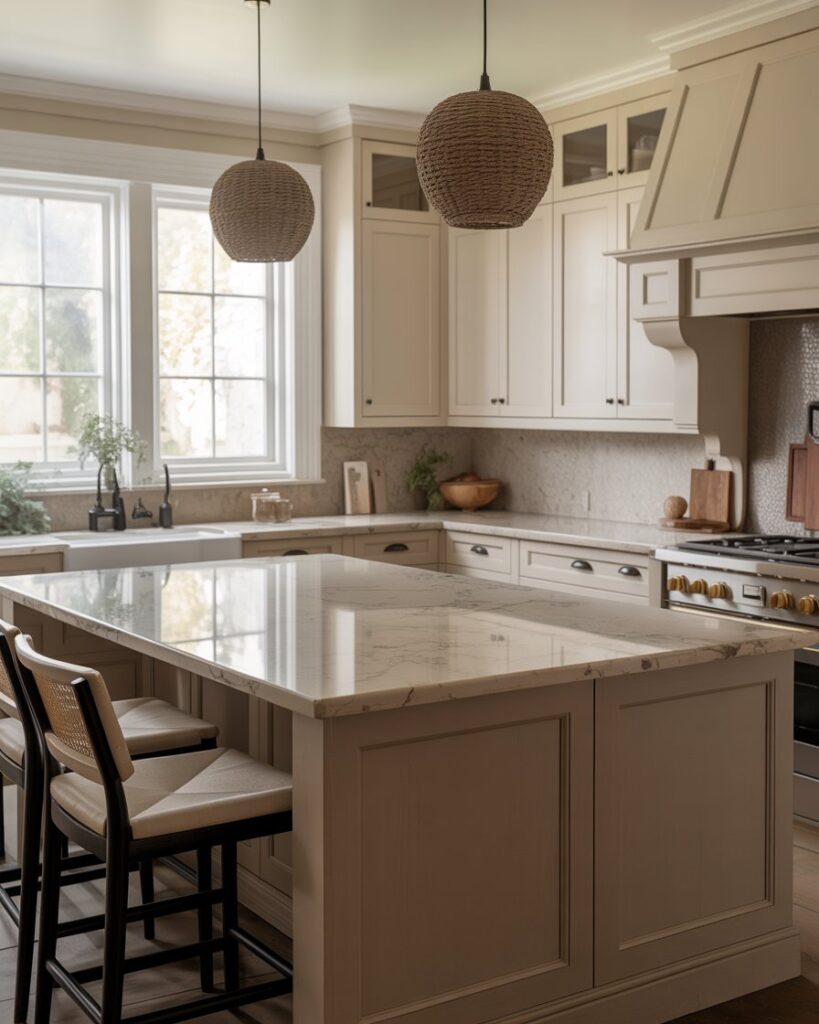
Instead of stark opposites, designers are layering shades within the same color family—warm whites with taupe, soft greige with natural wood.
How to style it:
- Warm white cabinetry with slightly darker island tones
- Neutral countertops with gentle veining
- Textural variation instead of bold color shifts
Why it works: It creates a calm, cohesive environment that feels elevated and intentional.
Integrated & Minimal Hardware Moments
While statement hardware is still relevant, there’s also a growing interest in more subtle, integrated solutions.
How to style it:
- Slim edge pulls or recessed finger pulls
- Appliance panels that blend seamlessly with cabinetry
- Minimalist knobs in warm metals for a refined touch
Why it works: It keeps the focus on materials and form rather than ornamentation.
Layered Lighting That Feels Like Design
Lighting is no longer an afterthought—it’s a defining feature.
How to style it:
- Sculptural pendants over the island
- Under-cabinet lighting for warmth and function
- Wall sconces above open shelving or near windows
Why it works: It adds ambiance, highlights textures, and makes the kitchen feel more like a living space.
Collected, Lived-In Styling
The final layer of today’s kitchens is styling that feels personal and curated.
How to style it:
- Vintage or handmade ceramics
- Wooden cutting boards and natural textures
- Art or framed prints in unexpected places
Why it works: It softens the kitchen and makes it feel like part of the home—not just a workspace.
Vertical Design Details That Draw the Eye Up
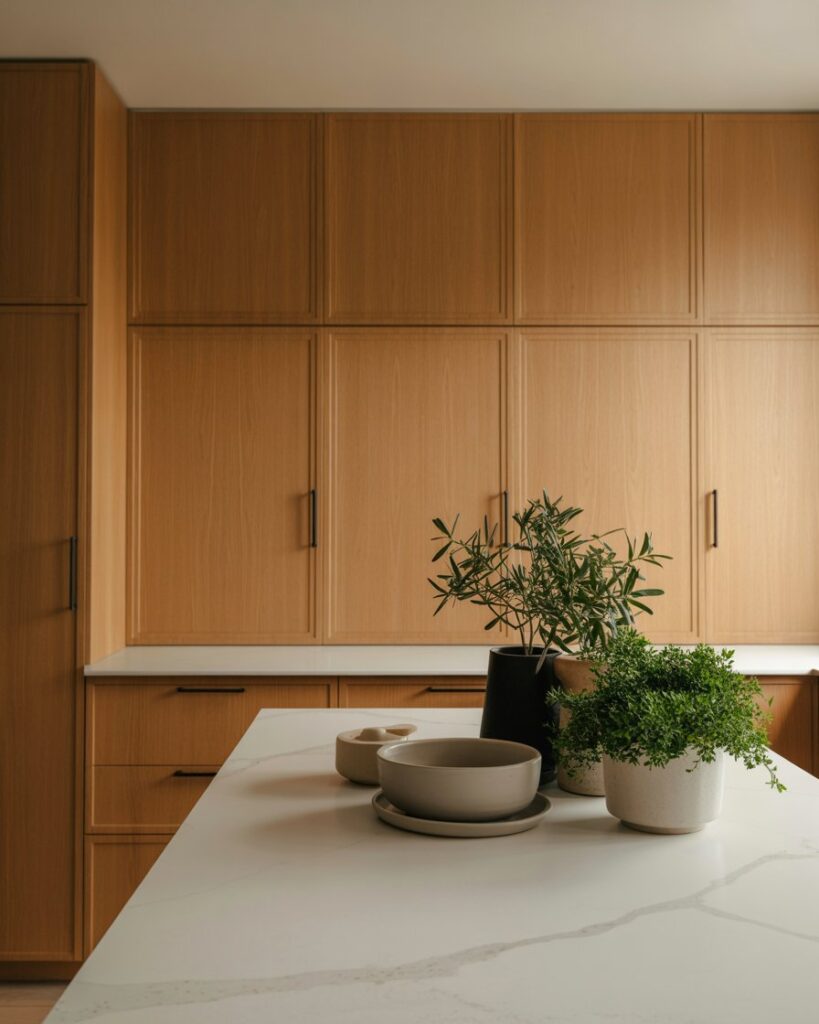
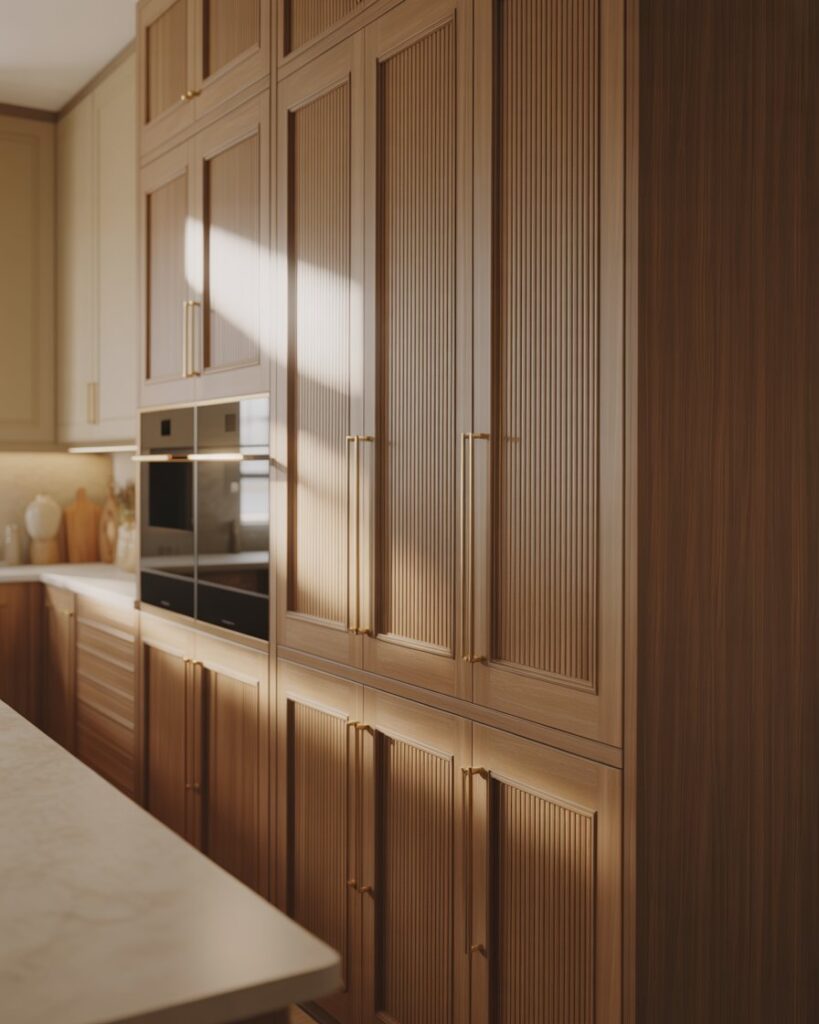
One of the more subtle—but incredibly impactful—kitchen trends is the use of vertical detailing to add height, rhythm, and architectural interest. Instead of flat expanses of cabinetry, designers are introducing vertical grooves, reeding, or paneling on pantry doors, tall cabinets, and even islands.
These elements bring a sense of craftsmanship and movement, especially in kitchens with clean, modern lines.
How to style it:
- Fluted or reeded panels on tall pantry cabinets
- Vertical grooved detailing on island bases or appliance garages
- Slab cabinet doors with applied vertical molding for a tailored look
- Painted finishes to highlight shadow and depth, or natural wood to emphasize grain
Why it works: Vertical lines naturally draw the eye upward, making ceilings feel taller and the space more dynamic—without adding visual clutter.
One Last Thing…
The most beautiful kitchens today aren’t about chasing trends—they’re about creating spaces that feel intentional, layered, and deeply livable. Whether you’re drawn to warm wood tones, creamy cabinetry, or statement stone, the key is balance.
Mix materials. Soften contrasts. Invest in details that age well.
Because the best kitchens don’t just look good—they feel like home.